
Yoga for Beginners: Simple Poses to Start Today
If you’ve been thinking about starting yoga but don’t know where to begin, you’re not alone. Many beginners feel unsure about the first steps, especially when they imagine advanced poses or experienced practitioners in studios. The truth is that yoga is accessible, adaptable, and designed for every body type and lifestyle—even if you’ve never stretched intentionally before. This introductory guide focuses on simple, foundational poses you can start today, even from the comfort of your home.
You’ll learn how basic movements support flexibility, improve posture, reduce stress, and gently awaken your mind–body connection, especially important for individuals facing daily pressures in the United States.
Understanding the Benefits of Starting Yoga
Before stepping onto the mat, it’s essential to know why yoga is such a powerful practice for beginners. Yoga is more than stretching—it supports joint mobility, boosts circulation, reduces anxiety, and helps regulate breathing patterns. Consistent practice can also improve sleep and energy levels. For many Americans with busy schedules, these benefits make yoga an efficient and grounding wellness tool that fits into short daily routines.
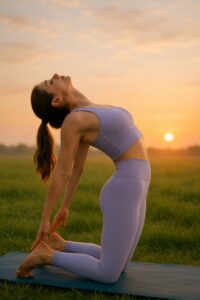
How to Prepare for Your First Yoga Session
You don’t need expensive equipment to begin. A simple yoga mat, comfortable clothing, and a quiet space are enough. Beginners should focus on slow movements and intentional breathing. It’s also helpful to keep a water bottle nearby and practice on a non-slip surface. If you have any health conditions, consider discussing yoga with a healthcare provider, as gentle modifications may be necessary.
Mountain Pose (Tadasana)
Mountain Pose is the foundation of many yoga sequences. Start by standing with your feet hip-width apart, arms relaxed by your sides. Engage your thigh muscles, lengthen your spine, and roll your shoulders back. This pose teaches alignment, balance, and awareness of your physical posture. It’s an ideal starting point for anyone new to yoga because it introduces the concept of grounding.
Child’s Pose (Balasana)
A restorative pose, Child’s Pose is perfect for relaxation and slowing down your breath. Begin on your knees, then gently fold your torso forward, extending your arms in front of you. This position releases tension in the back, neck, and shoulders—areas where many Americans typically store stress from long hours working at computers or commuting.
Downward-Facing Dog (Adho Mukha Svanasana)
Although it may feel challenging at first, Downward-Facing Dog is an extremely beneficial pose. Start on your hands and knees, then lift your hips upward until your body forms an inverted V. This pose strengthens the arms, stretches the hamstrings, and improves circulation. Beginners should bend their knees slightly if their legs feel tight, allowing the spine to stay long and comfortable.
Cat–Cow Stretch (Marjaryasana–Bitilasana)
This simple, rhythmic movement is excellent for warming up the spine. Start on all fours and alternate between arching your back (Cat) and lifting your chest while dropping your belly (Cow). The motion helps release stiffness from sedentary routines and encourages fluid movement. It’s especially beneficial for those who spend long periods sitting at desks.
Warrior I (Virabhadrasana I)
Warrior I introduces strength-building to a beginner’s practice. Step one foot forward into a lunge while keeping the back foot angled slightly outward. Raise your arms overhead and bring your hips forward. This pose strengthens the legs, builds balance, and encourages focus. If your hips feel tight, widen your stance to stay stable and aligned.
Seated Forward Bend (Paschimottanasana)
This gentle stretch helps improve flexibility in the lower back and hamstrings. Sit with your legs extended and slowly hinge forward from the hips, reaching toward your feet. You don’t need to touch your toes—just maintain a long spine and stop where your body naturally allows. This pose calms the mind and helps ease muscle tightness, especially after a long day.
Corpse Pose (Savasana)
Your practice should end with rest. Lie on your back with your arms relaxed at your sides and let your body fully settle. Savasana promotes deep relaxation, allowing your nervous system to reset. It also helps you absorb the benefits of your practice, making it an essential part of any session—beginner or advanced.
Conclusion
Starting yoga doesn’t require flexibility, strength, or experience—only the willingness to take the first step. With simple poses like the ones above, you can build a calming and empowering routine that supports both physical and emotional well-being. Whether you practice for five minutes or twenty, consistency is what brings long-term benefits.
If you enjoyed this article, share it so these insights can help others too! 🙏💛